Where Ancient
Civilisation
Still Breathes
An independent guide to planning a thoughtful, well-informed visit to Egypt's most extraordinary monuments and museums — written without commercial agenda or institutional affiliation.
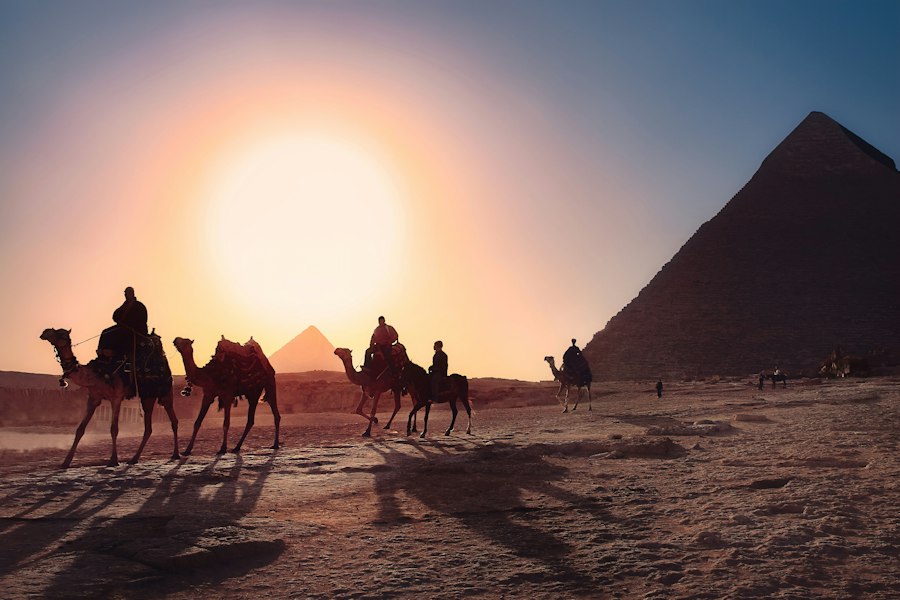 Giza Plateau, Cairo
Independent Educational Website: Nile Horizon Guide has no affiliation with the Grand Egyptian Museum, the Egyptian Museum, the Ministry of Tourism and Antiquities, the Supreme Council of Antiquities, or any official Egyptian body. We do not sell museum tickets, arrange tours, or make reservations. All information is for educational planning purposes only. Always verify prices and hours directly with each institution before your visit.
Why Nile Horizon Guide exists
Egypt is one of the most visited countries on Earth, and one of the most poorly served by the information available to visitors planning their first serious engagement with it. Most online content about Egypt's monuments and museums is either produced by institutions promoting their own offering, aggregated from sources of questionable reliability, or written for the kind of tourist whose primary goal is a good photograph rather than genuine understanding.
Nile Horizon Guide was written for a different kind of visitor. Someone who wants to stand at the base of the Great Pyramid knowing not just that it is enormous — that is visible — but how it came to be, who built it and under what conditions, what has been discovered inside, and what four and a half thousand years of subsequent history have done to our understanding of what it meant. Someone who wants to visit the Grand Egyptian Museum prepared to actually see what is there, rather than walking through one of the world's great cultural repositories in a fog of context-free wonderment.
"The monument seen without understanding is merely scenery. The monument seen with understanding becomes an encounter with humanity itself."
We are not affiliated with any museum, tourism body, or commercial institution. We do not sell tickets, arrange tours, or accept advertising. Everything on this site is written independently from published archaeological and historical sources, updated regularly, and offered free of charge.
The Monuments
Nothing on Earth prepares you adequately for the Giza plateau. The best preparation is understanding.
The Great Pyramid of Khufu
For nearly four millennia, the Great Pyramid of Khufu was the tallest structure on Earth — a record broken only in 1311 CE by Lincoln Cathedral in England. Originally rising to 146.5 metres, it now stands at approximately 138.8 after the loss of its polished white Tura limestone casing stones. Inside, the Grand Gallery — a corbelled limestone passage 8.6 metres high — leads to the King's Chamber, where Khufu's red granite sarcophagus still sits in a room maintained at a constant 20°C regardless of desert temperatures outside.
The popular image of slave labour was decisively overturned in 1990 when Zahi Hawass and Mark Lehner excavated the workers' village at Giza. The workforce was housed, fed, and medically cared for. Their graffiti reflects pride — "Friends of Khufu," "Drunkards of Menkaure" — not compulsion. They were skilled workers on history's most ambitious state construction project.
The Great Sphinx of Giza
Carved from a single limestone outcrop, the Great Sphinx is 73 metres long and 20 metres high — the largest monolithic statue ever made. It faces true east, aligned with the sunrise at the spring and autumn equinoxes. The nose was not destroyed by Napoleon's artillery — it was deliberately removed centuries earlier, most likely between the 3rd and 10th centuries CE. Between its paws, the Dream Stele of Thutmose IV (c. 1400 BCE) describes the then-buried monument and promises the throne to whoever cleared the sand. It is among the earliest historical references to the Sphinx in literature.
The Second and Third Pyramids
Khafre's pyramid appears taller than Khufu's due to its elevated position on the plateau and the survival of its original white limestone casing near the apex — one of the few remaining glimpses of how all three structures originally looked, gleaming white and visible from across the Delta. His funerary complex is the most complete on the plateau. Menkaure's pyramid, smallest at 65 metres, was never finished to its intended casing standard but contains internal chambers of remarkable artistry — ambition expressed in quality rather than scale.
The Museums of Cairo
Cairo holds more ancient Egyptian artefacts than anywhere else on Earth. Each institution tells a different part of the same extraordinary story.
Grand Egyptian Museum
The largest archaeological museum on Earth — 100,000+ artefacts across 93,000 square metres, the complete Tutankhamun collection displayed together for the first time, and a Grand Staircase of colossal royal statues overlooking the plateau. Plan a full day minimum. Two is better.
Egyptian Museum
The original national collection in a 1902 neoclassical palazzo. The Royal Mummies Hall — thirteen pharaohs including Ramesses II — remains here. Dense, atmospheric, and irreplaceable despite the GEM transfer. The building itself is a Cairo landmark worth experiencing.
National Museum of Egyptian Civilisation
Tells the complete story of Egyptian civilisation from prehistory through the Islamic era. Houses 22 royal mummies in the most dignified display of any Cairo institution. Lakeside setting in historic Fustat. Consistently undervisited and consistently impressive.
Museum of Islamic Art
One of the world's great Islamic art collections — 14 centuries of ceramics, metalwork, woodwork, manuscripts, and carpets in a renovated building near Bab al-Khalq. Damaged in 2014, closed for years, reopened with exceptional new presentation. Essential for the historically curious.
Coptic Museum
Egypt's Christian heritage from the 3rd through 19th centuries, housed in a beautiful building within the ancient Roman fortress of Babylon. Extraordinary woodwork, textiles, and manuscripts. Almost never crowded. One of Cairo's finest and least-known institutions.
Agricultural Museum
Cairo's most eccentric and rewarding hidden museum in a colonial palace surrounded by lush gardens. Traces Egyptian agricultural history from pharaonic times through the 20th century with remarkable dioramas and natural history specimens. Almost empty. Genuinely fascinating.
Before You Go
Eight things that separate a well-prepared visit from an expensive disappointment.
Arrive before the gates open
The Giza plateau and the GEM are dramatically better in the first two hours. Crowds build rapidly from mid-morning. Arriving before opening is the single most effective decision you can make.
The GEM needs a full day
At 93,000 square metres with 100,000+ artefacts, the Grand Egyptian Museum cannot be done properly in a half day. The Tutankhamun galleries alone take two to three hours. Plan accordingly.
Tickets from official sources only
Nile Horizon Guide does not sell tickets. Purchase all tickets directly from each institution's official website or on-site ticket office. Never buy from third-party sellers or street vendors.
October to April is the window
Summer at Giza regularly exceeds 40°C. October to April offers manageable conditions. December and January are peak season. Spring adds crowds from European school holidays but remains comfortable.
Carry Egyptian Pounds
Card acceptance at smaller museum services is improving but unreliable. Carry Egyptian Pounds for supplements, audio guides, food, and gratuities throughout your visit.
Dual pricing is standard
Egypt charges foreign visitors more than Egyptian nationals at virtually all heritage sites. This is national policy, not negotiable. Research current foreign visitor rates before you arrive.
Dress modestly throughout
Covered shoulders and legs are respectful throughout Egypt. For mosques and Islamic sites, women should have a head covering. One light layer handles all situations without taking up space.
Check hours 48 hours before
Egyptian museums change their hours for public holidays and Ramadan with minimal advance notice. Check each institution's official website in the 48–72 hours before your planned visit.
Frequently Asked Questions
Direct answers to what people actually want to know.
Is Nile Horizon Guide affiliated with any Egyptian museum or official body?
No. Nile Horizon Guide is fully independent with no connection to the Grand Egyptian Museum, the Egyptian Museum, the Ministry of Tourism and Antiquities, or any Egyptian institution. We accept no advertising or sponsorship.
Can I buy tickets through this website?
No. We do not sell, resell, or distribute tickets for any Egyptian heritage site or museum. All purchases must be made directly from each institution's official website or on-site ticket office.
How accurate are your price references?
All prices mentioned are approximate reference figures for planning only. Egyptian prices change without consistent advance notice. Verify current fees directly with each institution before your visit.
Can I visit the inside of the Great Pyramid?
Yes, with a separate interior ticket purchased at the plateau ticket office. Numbers are limited and tickets often sell out early. The interior is narrow, warm, and not suitable for claustrophobia or mobility difficulties.
Is it safe to visit Cairo and Giza?
Egypt's major tourist sites are heavily staffed and managed. Giza and central Cairo are generally safe for international visitors. Check your government's current travel advisory before departing.
How much time does the GEM require?
A minimum of four to five hours; ideally a full day. The Tutankhamun galleries alone take two to three hours to explore properly. Do not combine a full GEM visit with other major sites on the same day.